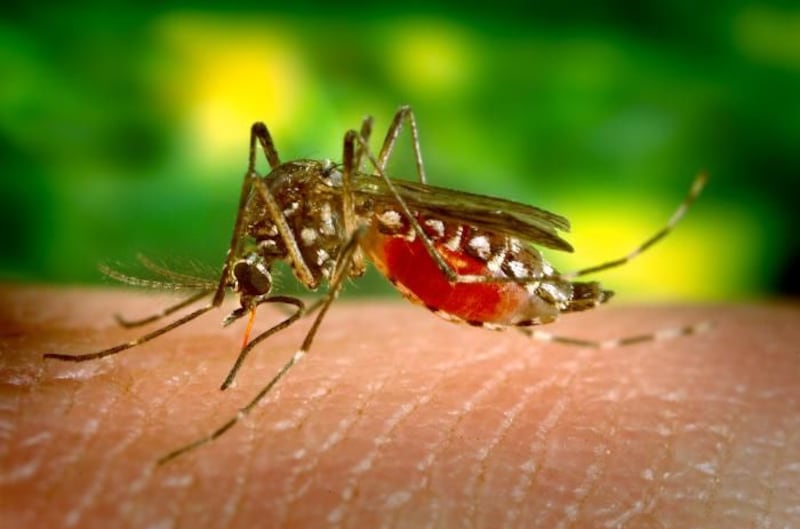
Each year, the state and local health departments test mosquito samples for the presence of West Nile virus.
The first positive mosquito batches for 2026 recently were found in Cook County.
While no human cases have been reported so far this year, last year there were 150 total human cases and 10 fatalities across Illinois, the Illinois Department of Public Health said.
West Nile virus is transmitted through the bite of a Culex mosquito, commonly called a house mosquito, that has picked up the virus by feeding on an infected bird, the IDPH said.
Common symptoms include fever, nausea, headache and muscle aches. Symptoms may last from a few days to a few weeks.
Most people infected with West Nile virus will not show any symptoms. However, in rare cases it can lead to severe illness including paralysis, meningitis or encephalitis, or even death, the IDPH said.
People age 60 and older and those with weakened immune systems are at highest risk for severe illness.
IDPH urges the public to follow these guidelines for reducing the mosquito population and risks for West Nile:
- Make sure doors and windows have tight-fitting screens. Repair or replace screens that have tears or other openings. Try to keep doors and windows shut.
- Eliminate, or refresh each week, all sources of standing water where mosquitoes can breed, including water in bird baths, ponds, flowerpots, wading pools, old tires, and any other containers.
- When outdoors, wear shoes and socks, long pants and a light-colored, long-sleeved shirt.
- Apply an EPA-registered insect repellent that contains DEET, picaridin, oil of lemon eucalyptus, IR 3535, para-menthane-diol (PMD), or 2-undecanone according to label instructions.(Consult a physician before using repellents on infants.)
- Report locations where you see water sitting stagnant for more than a week such as roadside ditches, flooded yards, and similar locations that may produce mosquitoes. The local health department or city government may be able to add larvicide to the water to remove mosquito larvae.
You can learn more on the IDPH website at West Nile Virus (WNV).
:quality(70)/author-service-images-prod-us-east-1.publishing.aws.arc.pub/shawmedia/8832388b-fc0a-47f3-aa56-fba06c9d2015.jpg)